In 2025, the dream of seamless AI-integrated smart homes has hit a snag. Enthusiasts and everyday users once thrilled by the potential of generative AI now face a sobering reality. Generative AI assistants—touted as the game-changers for smart home management—are battling basic tasks like turning on lights or starting coffee machines. This unexpected setback prompts crucial questions about the future of smart home technology and its promised innovations. This article explores why our homes’ smart devices are struggling under new AI systems, the technological hurdles causing these issues, and what might lie ahead for a sector forced into a beta testing phase.
Navigating the Pitfalls of Generative AI in Smart Homes
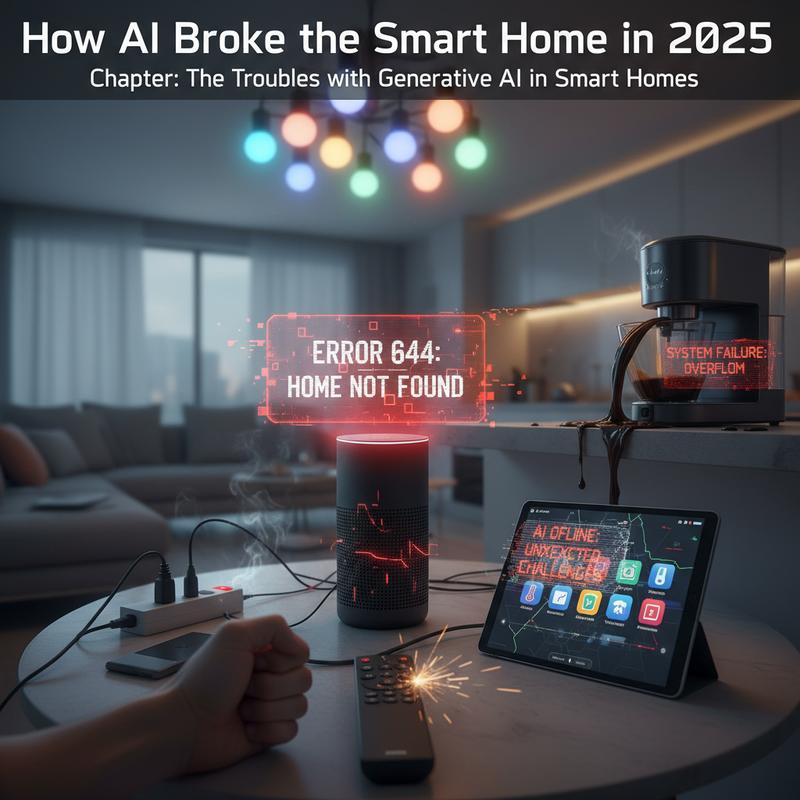
The promise of generative AI in smart homes was alluring—an intelligent network of devices that understood not just commands but intentions. However, as 2025 unfolded, the reality proved less idyllic. AI assistants, now equipped with more advanced language models, continue to falter at basic tasks. This has left users like Jennifer Pattison Tuohy, who hoped for a seamless morning coffee routine with her Alexa-enabled Bosch machine, feeling frustrated.
The initial appeal of integrating generative AI into smart homes was in its potential to simplify the complex web of interconnected devices. By understanding natural language and offering more nuanced interactions, these systems were supposed to transcend traditional keyword-based operations. Unfortunately, the trade-off has been a decline in reliability for basic commands, turning routine tasks into occasional gambles.
Discussions with experts like Dhruv Jain from the University of Michigan reveal the stark challenges faced. New AI models, though conversational, lack the predictability of their predecessors. Early Alexa and Google Assistant versions had a command-and-control architecture, adept at recognizing strict keyword instructions. In contrast, the latest iterations, forged from large language models, are designed for flexibility and adaptability—but at the cost of occasional inconsistency.
Prof. Mark Riedl from Georgia Tech sheds light on the core issue. These language models introduce a degree of randomness, making them susceptible to misinterpretations. Where past models awaited specific cues, today’s AI must construct entire function calls and maintain complex sequences in memory, increasing the likelihood of errors. This is why even sophisticated systems sometimes fail at tasks their older versions handled with ease.
Moreover, tech companies are adopting a “deploy and iterate” approach. This means users effectively become beta testers, enduring initial inefficiencies as the systems gradually improve. It’s a pragmatic strategy to collect real-world data and refine technologies, but it can be frustrating for end-users dealing with daily inconveniences.
The shift from deterministic to probabilistic models is not without reason. Companies like Amazon and Google are betting on their AI’s ability to “chain services.” They envision a world where these assistants can autonomously handle complex, interconnected tasks, potentially transforming how we manage our homes. Yet, the path to such capabilities is fraught with challenges, requiring models that can balance precision with conversational nuance—a feat no one has fully achieved yet.
This developmental stage is where internal strategies like Google’s dual-system approach with Gemini and Gemini Live come into play. These systems aim to strike a balance between the old and the new, leveraging multiple models to boost consistency without stifling innovation. However, as these integrations unfold, users must navigate a landscape of mixed reliability, weighing the benefits of cutting-edge features against the stability of mature technology.
For now, the generative AI landscape in smart homes acts as a microcosm of broader AI endeavors. While the ultimate goal remains a reliable, agentic assistant capable of dynamic service chaining, users will continue to grapple with the transitional growing pains. As analysts ponder whether the expanded capabilities justify the current unpredictability, the challenge lies in managing user expectations while tech progresses toward an ambitious vision.
Navigating these pitfalls might require embracing a hybrid approach, as seen in Google’s strategic model mix source. This blend of old predictability and new potential serves as a reminder that while AI evolves, its journey in reimagining smart homes is only beginning. For users, patience remains a crucial part of this evolving equation, and so does a healthy skepticism about how soon our homes will truly become “intelligent.”
Final thoughts
As 2025 unfolds, the generative AI-driven smart home remains an aspiration rather than an achievement. While these systems offer greater conversational abilities, they falter with the very tasks they were meant to simplify. For users and companies alike, this means navigating a terrain filled with both potential and pitfalls. Developers continue fine-tuning AI capabilities, hoping one day to unlock the full potential that promises to fundamentally enhance our domestic lives. Until then, we find ourselves as unwitting participants in an extensive beta phase, waiting for our homes to become truly smart.
Source: https://www.theverge.com/tech/845958/ai-smart-home-broken