The AI world is buzzing with unprecedented developments, marking a new phase in its evolution. This week alone, major players like OpenAI, Google, and Anthropic have unveiled initiatives that promise to reshape consumer experiences and workplace dynamics. From integrating ads into ChatGPT to launching powerful tools that amplify productivity, these shifts indicate a fierce competition for dominance in the AI sphere. These six telltale signs reveal the undercurrents driving this transformation, guiding tech enthusiasts and casual users alike to understand the rapid advancements and their implications. Join us as we dissect these pivotal moments redefining the AI race.
ChatGPT’s New Revenue Stream: OpenAI Embraces Ads

OpenAI is pivoting with an ad-integration strategy for its ChatGPT platform, signaling a significant shift in the AI landscape. The company announced it would soon introduce advertisements within its AI-powered chatbot, marking a new chapter not just for the chatbot itself but for the broader AI field, which is rapidly evolving to meet commercial demands.
The Drive Towards Monetization
OpenAI’s decision comes as no surprise in a tech ecosystem where monetization is key to sustaining growth and innovation. The introduction of ads, labeled as ‘sponsored,’ represents a move to leverage user interactions for revenue. This strategic pivot underscores the pressing need for OpenAI to generate substantial income to support its costly infrastructure. As competition intensifies, generating revenue through diverse avenues, like ad placements on one of the world’s most popular AI tools, becomes crucial.
Melissa Otto, head of research at S&P Global Visible Alpha, emphasized the importance of this move by noting, ‘ChatGPT can leverage the cash flow to support their growth and spending.’ OpenAI’s ambition to continue its expansion means developing innovative ways to fund its initiatives without diluting its brand value. An ad-free option will remain available for some paid subscribers, allowing for user choice and control over their experience – a key factor in maintaining user trust and engagement.
Implications for the AI Market
This development is a testament to the evolving dynamics within the AI market, where revenue models are as pivotal as technological advancements. OpenAI’s need for substantial funds highlights the costs associated with scaling AI services such as data center expansions. This move might also influence other AI entities examining sustainable paths to profitability in a market where technological leadership and fiscal health are intimately linked.
Ads on ChatGPT could also set precedence for other AI entities considering similar strategies. As seen with other AI tools, integrating monetization with innovation is often necessary to drive growth. It’s a balancing act—ensuring continued service enhancement without alienating the user base who have grown accustomed to ad-free AI interactions.
Potential Market Adjustments
This shift could trigger marketplace adjustments, with competitors reevaluating their revenue mechanisms. Google, Anthropic, and other AI players might revisit their strategies, potentially adopting innovative models that align with user expectations and financial viability. Anthropic’s activities, such as the recently popular Cowork tool, signal that AI capabilities are diversifying and adapting quickly to new tasks, adding complexity to market strategies.
The AI field is increasingly marked by rapid shifts, as players like Google Gemini and others innovate to maintain relevance. Gemini’s recent introduction of personalized intelligence features in Gmail further illustrates how deep-seated companies integrate AI into existing ecosystems to enhance user experience while fostering revenue streams.
As the AI race evolves, OpenAI’s ad integration strategy will likely serve as a case study for both successful monetization and the challenges of maintaining service integrity amidst market pressures. With this move, OpenAI has not only entered a new economic phase but also pushed the conversation forward about how next-generation AI services might sustain themselves economically.
In navigating this critical junction, OpenAI is challenged to balance innovation with commercial realities—an endeavor that could redefine how AI technologies will thrive in the coming years.
Anthropic’s Cowork Tool: A New Era of Workplace AI
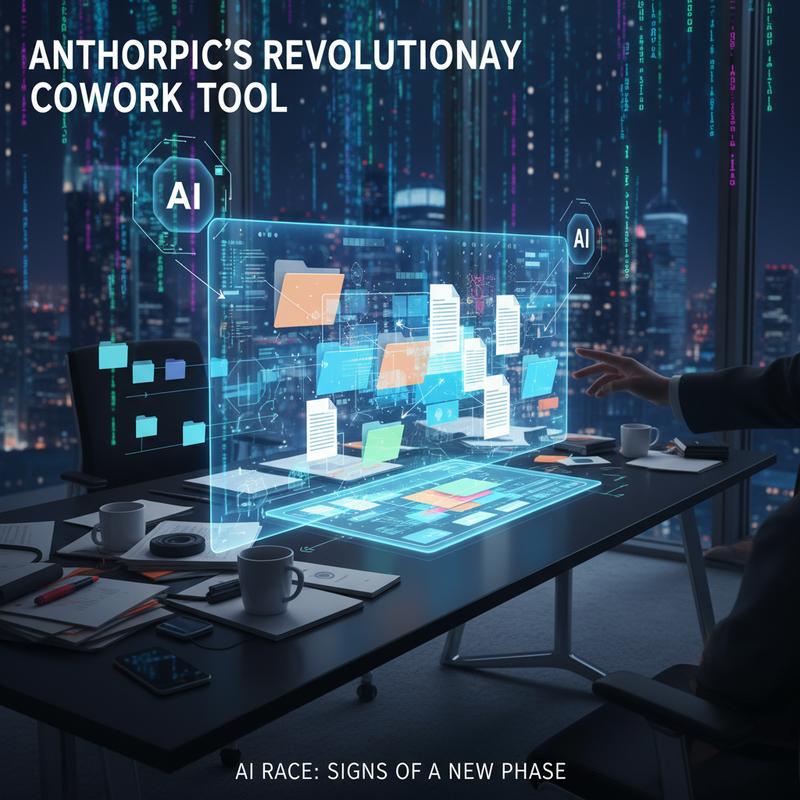
The artificial intelligence arena is constantly evolving, and Anthropic has made headlines with the release of its innovative Cowork tool. This new development, emerging amid fierce competition among major tech firms like OpenAI and Google, marks a pivotal moment in the AI race.
Anthropic’s Cowork tool, a groundbreaking offering built on the AI-powered coding framework Claude, is making waves for its ability to assist non-coders with day-to-day activities. The tool showcases the power of AI-driven automation, as evidenced by a viral demo video where a chaotic desktop is neatly organized into labeled folders. This demonstration appealed particularly to ‘vibe coding’ enthusiasts—individuals who leverage AI prompts to streamline tasks traditionally handled by human developers.
Revolutionizing Workplace Dynamics
Cowork’s introduction is a significant leap forward in the workplace AI domain. While AI is often synonymous with complex coding tasks, Anthropic’s tool underscores the versatility and accessibility of AI solutions by simplifying routine tasks for everyday users. This aligns with a broader trend where AI reshapes rather than replaces jobs, a sentiment echoed by Anthropic in recent studies. The company’s research shows a shifting job landscape where AI complements human roles by undertaking parts of tasks, thus enhancing productivity, especially in complex scenarios.
Anthropic’s Self-Building AI
What sets Cowork apart is its creation using Anthropic’s Claude. This self-referential development process illustrates a fascinating aspect of AI evolution where an AI-driven tool plays a pivotal role in building itself. Such developments not only underline AI’s potential for self-improvement but also fuel the narrative of tech advancements that continuously push the boundaries of efficiency.
AI Adoption Challenges and Opportunities
Despite the excitement surrounding AI tools like Cowork, challenges persist in deploying these technologies on a broad scale. As highlighted by a BlackRock study, the surge in demand for AI-related infrastructure projects, such as data centers and high-tech buildings, is encountering roadblocks due to a limited pool of skilled workers. To overcome these hurdles, comprehensive training programs sponsored by both governments and private enterprises could be key in achieving sustainable growth and revolutionizing traditional industries.
Navigating the Future
Anthropic’s recent tool introduction is but one development in the competitive AI landscape. As OpenAI plans to introduce ads to ChatGPT and Google enhances user experiences with its Gemini AI in services like Gmail and YouTube, the race for AI supremacy intensifies. As such, assessing the impact and integration of tools like Cowork will be crucial as businesses and individuals navigate this rapidly changing terrain.
For those keen on understanding more about similar AI innovations, itcarolina.com offers a plethora of resources on AI tools and their applications across various sectors, enabling stakeholders to stay informed in this dynamic domain.
Cowork marks a transformative moment in AI application, further blurring the lines between complex and routine tasks, and setting the stage for an AI-driven evolution in workplaces worldwide.
Google’s Gemini Personal Intelligence: Reshaping User Experience
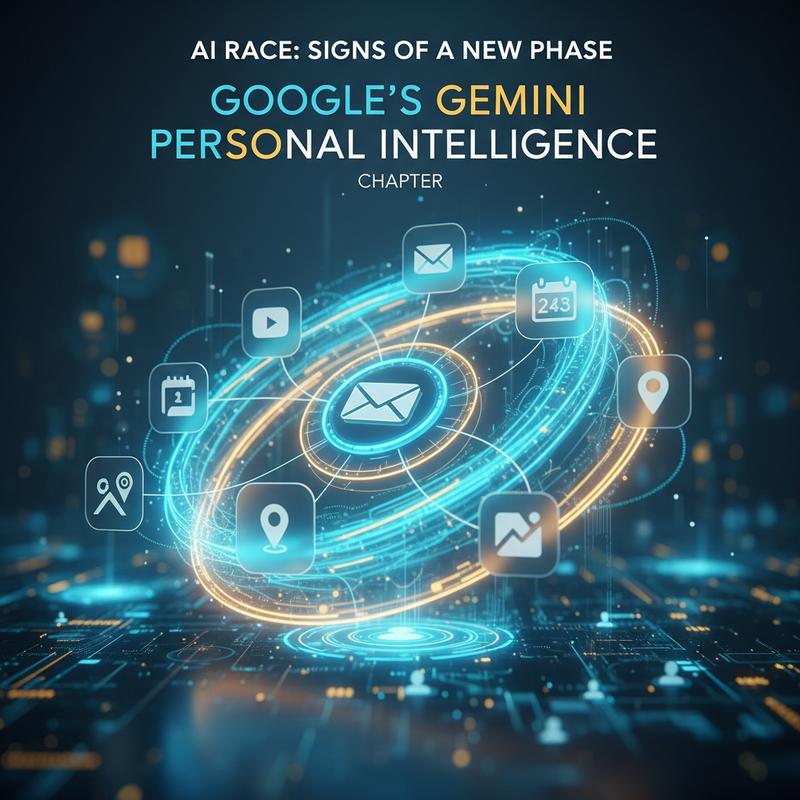
As the artificial intelligence race intensifies, Google’s Gemini Personal Intelligence marks a pivotal moment in how users interact with technology. Released this month, Gemini’s integration into Google’s ecosystem represents a significant leap towards creating personalized user experiences. With this move, Google is positioning itself to redefine the intersection of AI and everyday digital tools, directly challenging competitors like OpenAI and Anthropic.
Personalization at Scale
The Gemini update introduces a new ‘Personal Intelligence’ feature, aiming to enhance user interaction with Google’s suite of applications. By integrating with services such as Gmail, YouTube, and Google Photos, Gemini allows for a tailored digital environment, adjusting functionality based on user behavior and preferences. This feature offers AI email summarizations, an AI writing assistant, and improved search capabilities, potentially transforming the way users handle daily tasks and consume content.
Gemini’s introduction is not just about adding new features; it’s about rewriting the rules of engagement within the Google ecosystem. YouTube now benefits from AI-driven recommendations that better predict user interests, making it a more intuitive platform for discovering content. Google Photos, on the other hand, tailors suggestions for organizing and sharing images, enhancing the user’s ability to manage multimedia content effectively.
Strategic Implications in the AI Race
Google’s enhancements through Gemini are not merely technological advancements; they are strategic maneuvers to reaffirm its position in the burgeoning AI landscape. As OpenAI and Anthropic make strides with tools like ChatGPT and Cowork, Google’s focus remains on deep integration and broad user impact, a potentially decisive factor in securing AI dominance.
The narrative of AI not only aiding but transforming professional environments is bolstered by submissions like Anthropic’s Claude, which demonstrates how AI can reshape workflows without eliminating jobs. In this evolving context, Gemini’s approach to enhancing productivity and personalization aligns closely with industry trends toward augmenting rather than replacing human labor.
Future Directions and Challenges
One challenge facing Gemini is the integration across diverse user bases while maintaining security and privacy standards. As AI systems become more interconnected, ensuring user data protection in these new capabilities is crucial. Google’s ongoing commitment to data security, as evidenced in announcements surrounding these updates, suggests that addressing this balance is a key priority.
Looking ahead, Google’s Gemini is poised to introduce further innovative solutions, potentially collaborating with external developers to extend its influence. By inviting third-party contributions, Google could enrich its services with unique features and perspectives, possibly engaging tech communities through platforms similar to ItCarolina’s AI tools to accelerate adoption and functionality expansion.
Conclusion
In a landscape where AI capabilities are rapidly becoming core to technological advancement, Google’s Gemini Personal Intelligence is a testament to the impact of integrated AI solutions in personalizing digital interactions. Whether through enhanced productivity tools or smart content recommendations, Gemini represents a critical step in Google’s journey to redefine user engagement and spearhead AI-driven innovation.
Redefining Job Roles with AI Advancements
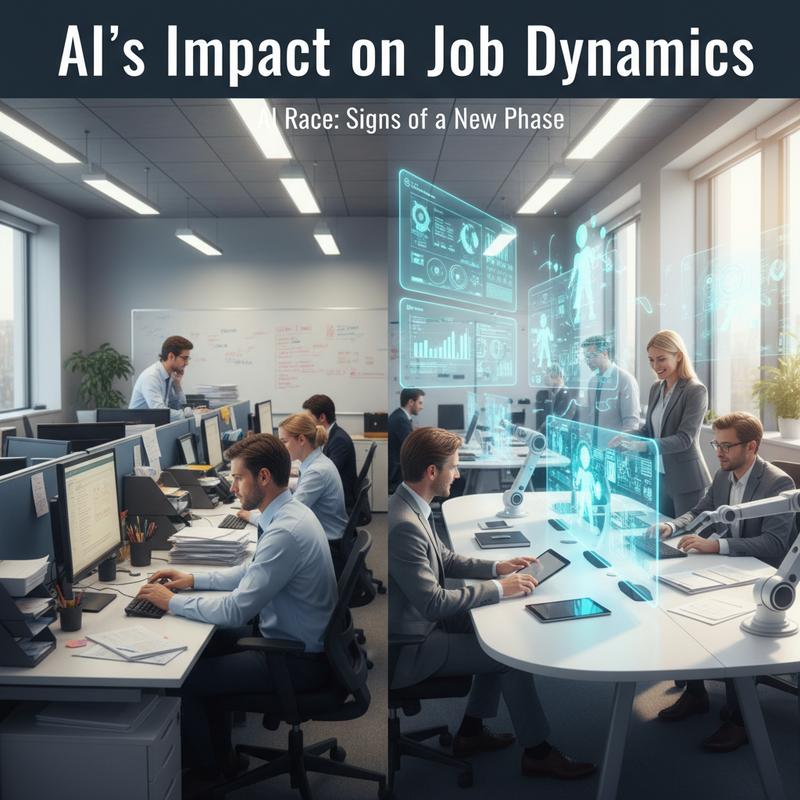
In the rapidly evolving landscape of artificial intelligence, there’s an enduring debate over its impact on the workforce—a debate increasingly nuanced by the evidence of AI reshaping job dynamics rather than eradicating jobs wholesale. Anthropic, a notable player in the AI sector, recently presented a study that closely examines this shift, highlighting how AI is altering job roles instead of completely replacing them.
Contrary to earlier fears that a surge in AI would wipe out countless entry-level jobs, Anthropic’s findings provide a more optimistic take. AI appears to be augmenting human capabilities, allowing workers to tackle more complex tasks by offloading routine responsibilities to automated systems. The research spotlights how employees are transitioning from mundane activities to higher-level functions that demand critical thinking and creativity.
AI’s Collaborative Potential
AI’s impact on job dynamics is best represented by novel tools like Anthropic’s Cowork, which is gaining traction for its ability to aid non-coders in managing daily activities. Designed using Claude Code, an AI programming facilitator, Cowork epitomizes AI’s collaborative potential by enhancing productivity through streamlined task management. For instance, a popular demonstration showed Cowork organizing a cluttered desktop into neatly labeled folders, embodying the appeal of ‘vibe coding’—developing applications seamlessly through natural language prompts.
Anthropic’s report aligns with broader market sentiments that AI is not about obliterating jobs but transforming them. The emphasis is on improving task precision and offering workers the luxury of focusing on strategic initiatives. Employers are already navigating how to integrate AI systems into their operations without compromising human oversight, highlighting an era where humans and AI work side by side.
Google’s Gemini and Workplace Integration
Further illustrating AI’s transformative influence is Google Gemini’s recent expansion into Gmail and other Google services. This integration introduces AI-driven features like email summaries, a writing assistant, and enhanced search capabilities to a global audience of 3 billion users. Such advancements demonstrate how AI is increasingly embedded in our daily workflows, prompting employees to think differently and embrace new operational methodologies.
Gemini’s features showcase an adaptive approach to workplace challenges, further suggesting that AI will complement rather than compete with human intelligence. By automating repetitive tasks, employees are liberated to pursue innovative avenues, emphasizing solution-based outcomes while leveraging AI’s logistical strengths.
Balancing AI and Human Labor
Despite concerns over job displacement, it’s crucial to recognize the value AI adds to the employment tapestry. A pivotal concern remains the geographic disparity in readiness for AI’s integration, particularly in sectors like AI-related construction where demand outpaces skilled labor supply, as outlined in a recent BlackRock study. The race is on to bolster training programs that will prepare workers for this AI-augmented future, suggesting a need for concerted efforts from government entities and businesses alike.
In this context, AI doesn’t signify the end of jobs but the doorway to evolving roles and industries. The narrative is shifting from doom to opportunity as entities like OpenAI, Google, and Anthropic continue to drive this change. With Gemini’s capabilities rewriting email handling and Cowork making coding more accessible, there’s an undeniable pivot towards inclusive technology that reshapes the workplace into a more dynamic and accessible environment.
As businesses and governments seek to harness AI’s capabilities more fully, the challenge lies in ensuring that the workforce is equipped to thrive in this new landscape. At the same time, ethical considerations around AI use will increasingly occupy the strategic agenda, as emphasized by Microsoft’s recent five-point plan to address community concerns related to data centers. AI may not spell the demise of occupations but rather heralds a new chapter in how society and technology coalesce to redefine progress.
Navigating the AI Infrastructure Hurdles

As the artificial intelligence landscape continues its rapid evolution, the demand for robust AI-driven infrastructure is growing at a breakneck pace. This progression, however, is not without its obstacles, particularly in the US, where a new BlackRock study underscores a glaring skill shortage in the labor market. Demand for data centers and the infrastructure required to sustain AI technology is surging, yet the workforce hasn’t caught up to this momentum.
In the report, BlackRock warns that the boom in AI-related construction could be hindered by a lack of skilled workers ready to build and maintain data centers and factories. These facilities are crucial as they house the massive computational processes needed to support AI operations. This challenge is compounded by the fact that existing manufacturing and construction capabilities are not yet fully aligned with the unique specifications of AI projects.
Workforce and Training Gaps
A critical component of resolving these infrastructure challenges lies in enhancing the labor pipeline. BlackRock suggests that strategic investments in training programs, both from corporate leaders and government initiatives, could potentially unlock significant growth. Advanced education and skill development initiatives can bridge the existing gap between supply and demand in the labor force, ultimately driving the AI industry forward.
The role of the government here cannot be overstated. Public sectors must engage with educational institutions and private companies to create comprehensive training frameworks. This partnership is essential to design curricula that cater specifically to the needs of AI infrastructure, thereby preparing the next generation of workers for the digital future.
The Business Perspective
From a business standpoint, these workforce limitations offer both a challenge and an opportunity. Companies are now tasked with innovating ways to keep pace with AI developments while mitigating risks associated with labor shortages. This scenario presents a unique chance for businesses like Microsoft and Samsung, who are making strides to scale their AI capabilities. Their solutions could lead to transformational shifts across industries that currently depend on AI.
For companies like OpenAI, financial strategies are also coming into play. The introduction of ads to ChatGPT is a strategic move to generate revenue, which could fund infrastructure expansion. OpenAI needs substantial capital to build the data centers necessary for scaling its chatbot operations and ensuring reliable service delivery.
Conclusion
The AI infrastructure race highlights critical gaps that need immediate attention, both in the workforce and in the design of educational paradigms. While hurdles remain, the blend of technology innovation with enhanced training programs holds the promise of a robust, sustainable AI ecosystem. It is an exciting time for the field, where preparation meets opportunity to shape the future of AI advancements.
For further insights into AI innovation and infrastructure, explore our AI tools section for more context on how technology is evolving in today’s landscape.
Landmark Moves as OpenAI, Anthropic, and Google Jostle for AI Supremacy
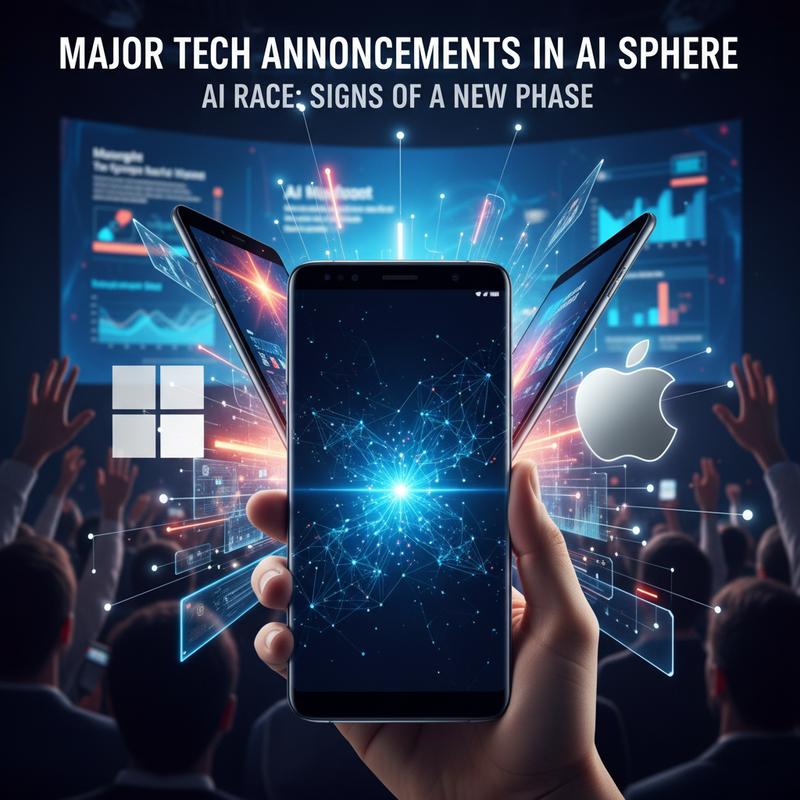
The AI race took significant steps forward this week, marked by high-profile announcements from industry leaders OpenAI, Anthropic, and Google. Each of these techno-giants heralded new initiatives set to reshape the digital landscape, further complicating the battle for dominance in artificial intelligence.
OpenAI stirred the pot by announcing its plan to introduce ads on ChatGPT. This move aims to generate substantial financial support necessary to expand their infrastructure. Advertisements, tailored by conversation context and labeled as ‘sponsored,’ will soon become a part of the ChatGPT experience. For those seeking an uninterrupted experience, OpenAI plans to offer an ad-free option through a paid subscription model, as it looks to balance user satisfaction with business imperatives.
Anthropic, not stepping away from the spotlight, launched their much-discussed ‘Cowork’ tool. This AI-driven service is set to revolutionize productivity software by assisting users with non-technical tasks akin to a digital assistant, albeit one powered by the company’s AI, Claude. A demo displayed Cowork effortlessly tidying up a cluttered digital workspace—a familiar task made simpler through what fans are now calling ‘vibe coding.’ This tool thus positions itself not only as a productivity hack but also as a reflection of AI’s evolving capabilities.
Meanwhile, Google unveiled enhancements in their AI ecosystem with Gemini’s ‘Personal Intelligence’ feature. This initiative aims to mesh the AI’s capabilities with Google services like Gmail and YouTube for a seamless personalized experience. This integration allows users to enjoy AI-driven summaries, writing assistance, and enhanced search functionalities, targeting the massive user base of over three billion people.
Amid these advancements, the narrative around AI’s impact on employment shifted slightly. Previously, there were grave predictions about AI rendering a significant chunk of entry-level jobs obsolete. However, new insights reveal that AI is transforming jobs rather than entirely eliminating them, taking over specific tasks while leaving human oversight crucial. This nuanced view was underscored by a recent Anthropic study, which pointed out that the most significant benefits of AI integration are seen in complex tasks where digital and human efforts leverage each other’s strengths.
An emerging concern, however, relates to the burgeoning construction boom to support the AI infrastructure demand. A BlackRock study warns of a potential shortfall in skilled labor, crucial for erecting data centers and upgrading existing infrastructure to cater to the AI wave. This underlines the urgent need for structured training programs to build a capable workforce ready to seize consequential growth opportunities.
In parallel, other tech giants in the sphere are making their own AI-infused announcements. Microsoft is addressing community concerns over the environmental impact of data centers, while Apple has made a strategic choice by partnering with Google to enhance Siri. Samsung, on its part, plans to expand its AI-powered smartphone lineup, underscoring the accelerating integration of AI across consumer technologies.
These strategic movements reflect the increasingly competitive nature of the AI landscape. Although it is uncertain which player will ultimately top the market, what is indisputable is the amplified tempo of advancements and adoption across sectors. For more insights on AI’s transformative effects, you can explore the growing variety of AI tools available at IT Carolina’s AI platform.
Final thoughts
As the AI frontier rapidly expands, these six pivotal developments highlight an industry on the brink of profound transformation. They mark a shift not just in advancements but in our everyday interactions with technology. With new tools aiding workplace impeccability, personalized experiences becoming the norm, and infrastructure challenges pushing the boundaries of current capabilities, the AI race is far from reaching a stalemate. While each sign indicates a promising future, they also point to the increasing importance of innovation, collaboration, and adaptation within the technological sphere. Individuals and industries alike must remain vigilant and proactive in navigating this exciting, ever-evolving landscape.
Source: https://www.axios.com/2026/01/17/chatgpt-ads-claude-gemini-ai-race