For years, Call of Duty dominated the gaming charts. Since its 2003 debut, it delivered blockbuster after blockbuster, particularly after Call of Duty 4: Modern Warfare in 2007. However, 2025 marked a shift in this gaming dynasty. A combination of competition like Battlefield 6 and ARC Raiders and technical and narrative missteps in Black Ops 7 led to the famous franchise finally losing its top spot. This article dives into the dynamics that led to the shift, examining the role of its failures and rivals’ strengths, painting a comprehensive picture of how Call of Duty’s empire was challenged.
Failures and Fierce Competition: The Fall of Call of Duty
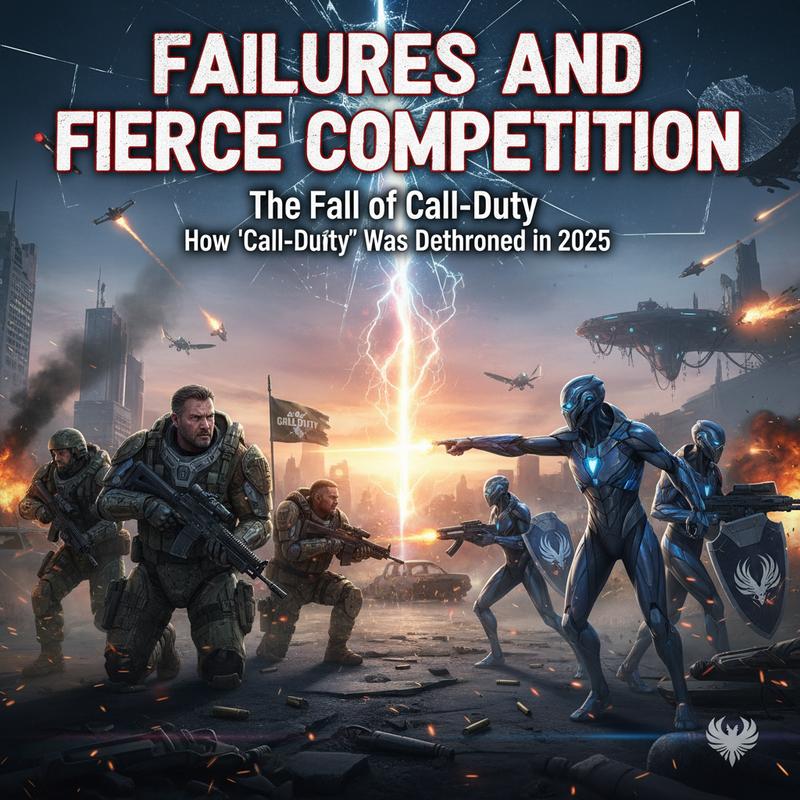
The year 2025 marked a seismic shift in the gaming landscape, one where the seemingly unassailable ‘Call of Duty’ franchise was finally toppled from its long-held position as the king of shooters. It wasn’t just one misstep that caused its downfall; rather, a series of miscalculations and fierce competition eroded its dominance.
For years, ‘Call of Duty’ had been the gold standard in first-person shooters, consistently topping sales charts. Released on November 14, ‘Black Ops 7’ marked a divergence from this legacy, failing to resonate with both critics and gamers. According to Metacritic, it received one of the lowest scores in the franchise’s history, with criticisms targeting its underwhelming campaign story. Even fan-favorite modes like multiplayer and zombies couldn’t completely salvage its reputation.
The campaign, criticized for being ‘the worst Call of Duty campaign ever,’ suffered from a lack of intriguing narrative and gameplay elements. Uniquely, it required a constant internet connection and cut out mid-mission checkpoints, frustrating many players who had to restart levels in the event of a connection lapse. While these issues tarnished the single-player experience, they also highlighted the broader failings in adapting to shifting player expectations.
Despite these setbacks, the game still managed to become the top-selling title for November 2025, continuing an 18-year streak. However, a deeper look reveals troubling signs, with sales figures markedly down compared to ‘Black Ops 6,’ and user engagement dwindling.
More alarming was the rise of formidable rivals that had clawed their way up the FPS ranks. ‘Battlefield 6,’ launched by Electronic Arts, returned to its robust roots, focusing on large-scale combat with thrilling multiplayer modes. Years of feedback and the strategic direction of Vince Zampella, a veteran who helped establish ‘Call of Duty’ itself, paid off. Nostalgia played a role, too, with remastered maps that appealed to long-time fans.
Meanwhile, Embark Studios introduced ‘ARC Raiders,’ a game that succeeded in drawing ‘Call of Duty’ fans by offering a fresh third-person shooter experience. Though different in style, it tapped into the casual gaming demographic, unexpectedly splitting gamer attention.
‘Battlefield 6’ took a bold approach, teasing out what the players loved—dynamic warfare, destructible environments, and tactical squad play—while toning down elements that had alienated fans in previous releases. This formula, combined with deliberate marketing aimed at contrast with ‘Call of Duty,’ led to a resounding success, catapulting ‘Battlefield 6’ to become the best-selling game of the year.
Not to be overlooked, ‘Fortnite’ also had a hand in upending ‘Call of Duty’s’ reign. A collaboration with ‘The Simpsons’ attracted aging gamers nostalgic for the long-running TV show, further fragmenting the player base and underscoring the ferocity of competition in the FPS market.
The gaming landscape is transient and sometimes merciless. For ‘Call of Duty,’ 2025 demonstrated that even a venerable franchise is not immune to the fallout of strategic blunders and the pressures of innovation from emerging competitors. It was a year that underscored the importance of adaptability and listening to the player base, a lesson that Activision, and other developers, won’t soon forget.
Final thoughts
The dethronement of Call of Duty in 2025 serves as a reminder of the volatile nature of the gaming industry, where even the most enduring franchises must adapt or risk losing their standing. The confluence of heightened competition and significant game design missteps illustrates how rapidly fortunes can shift. As rivals like Battlefield 6 and ARC Raiders raised their game, Call of Duty’s miscalculations in Black Ops 7 proved costly. This moment marks what could be seen as a turning point, reigniting competition and possibly heralding a renewed era of first-person shooter innovation.