GameStop recently addressed a trade-in loophole concerning the Nintendo Switch 2 that turned into an unexpected ‘Infinite Money Glitch.’ This clever exploit, demonstrated by a YouTuber, allowed customers to gain significant store credit by trading and rebuying the console. Responding swiftly, GameStop closed this gap to restore trade-in balance. The revelation underscores ongoing challenges in managing promotions and shines a light on how companies adapt to potential exploits. This article delves into the exploit’s mechanism, the corporate response, and its broader implications on GameStop’s trade-in policies, offering tech enthusiasts and general users insight into the retail world of gaming.
GameStop Closes ‘Infinite Money Glitch’ in Nintendo Switch 2 Trade-in
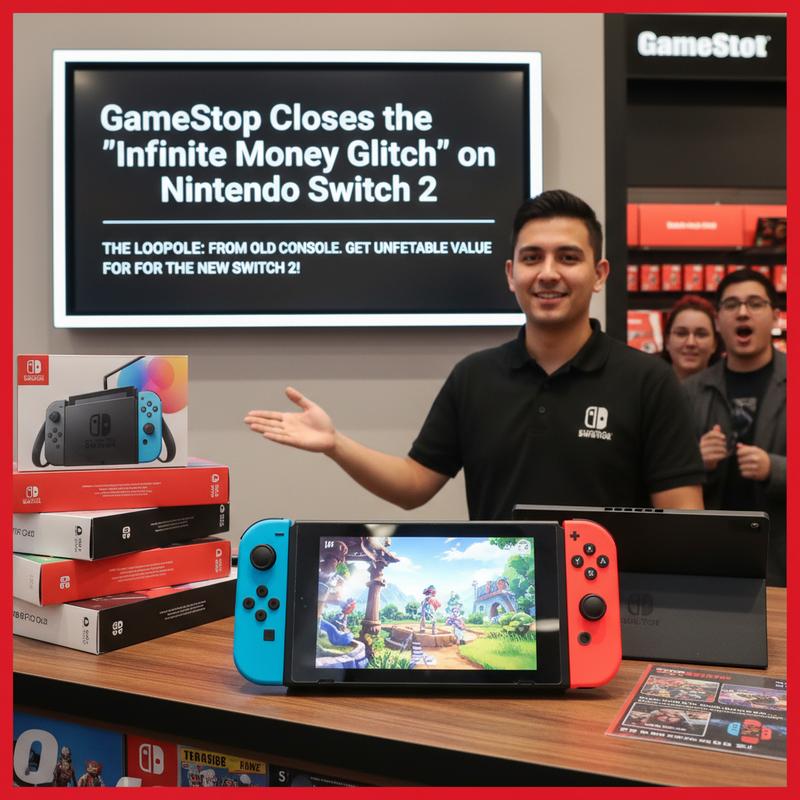
In an intriguing turn of events, GameStop has recently shut down a trading loophole that allowed customers to generate what internet users have dubbed an ‘Infinite Money Glitch.’ Through a strategic but temporary gap in its promotional system, customers could purchase and then trade in the Nintendo Switch 2 for a net gain in store credit.
The discovery of this loophole came to light when a YouTube video from RJCmedia detailed the process, touting the loop as a surefire way to profit. According to the method demonstrated, customers could buy the Nintendo Switch 2 for $414.99, trade it back at a value inflated by a promotional bonus, and effectively earn $472.50 in store credit per transaction. The catch here: this neat trick involved buying a pre-owned game alongside each console flip.
While the procedure seemed simple, it was hardly widespread. GameStop’s exposure to the issue stemmed mainly from the YouTube spotlight rather than extensive customer exploitation. The company was quick to verify the glitch’s existence following the video’s release. As its announcement on social media states, the trade-in promotions have now been revised to prevent such a windfall from reoccurring.
GameStop’s response to the glitch was both swift and somewhat light-hearted. In a statement to IGN, a spokesperson commented on the irony of the situation, playfully noting, ‘Yes, the “GameStop Infinite Money Glitch” was real (briefly)… ironic, given the internet usually tells us our trades suck.’ This kind of candid humor isn’t new for the company. They’ve ventured into humor before, turning mishaps into public-relations moments, like the viral Switch 2 stapler incident, which ended in a charity auction.
The swift handling of the glitch brings to light GameStop’s vigilance over their operations, as they revealed how an anonymous tip to a minor inbox led them to the glitch. It wasn’t entirely the work of algorithmic surveillance or massive public reports. Instead, a single vigilant user’s alert successfully prompted GameStop to act.
Notably, this trading saga unfolds at a tumultuous time for the retailer, with reports suggesting plans to shutter approximately 400 stores globally. This financial ‘glitch’ could have been a minor boon for some employees and customers during an uncertain period. But the swift patchwork reinforces GameStop’s commitment to maintaining the integrity of its trading system.
The company’s forthright approach to the issue, coupled with its amusing handling, mirrors broader industry trends where corporations seek to transform potential pitfalls into branding opportunities. Moments like these also underscore a paradox within the gaming world, where promotional strategies striving to engage customers can sometimes backfire bracingly.
For more insights on technology news and trends, check out IT Carolina’s blog.
Final thoughts
GameStop’s swift response to the Nintendo Switch 2 trade-in exploit highlights the delicate balance between promotional incentives and consumer behavior. The incident serves as a reminder of the evolving nature of retail, where digital platforms can rapidly amplify unintended loopholes. By promptly addressing the glitch, GameStop aims to preserve its marketing strategies’ integrity, maintaining customer trust and engagement. Such scenarios underscore the importance of agile business practices in the tech and retail sectors, where user feedback often drives improvements. As GameStop moves forward, it will likely refine its promotions to safeguard against similar exploits.