The gaming industry stands at a pivotal point as Microsoft’s longtime gaming chief Phil Spencer announces his retirement after a remarkable 38-year journey with the tech giant. His departure comes after 12 years of leading the company’s video game division and significant milestones such as the acquisition of Bethesda Softworks and the groundbreaking merger with Activision Blizzard. This article delves into the impacts of this leadership change, the strategic vision of Spencer’s successor Asha Sharma, and the evolving landscape of Xbox, setting the stage for what’s next in Microsoft’s gaming narrative.
Phil Spencer’s Departure Marks a New Era for Microsoft’s Gaming Ambitions
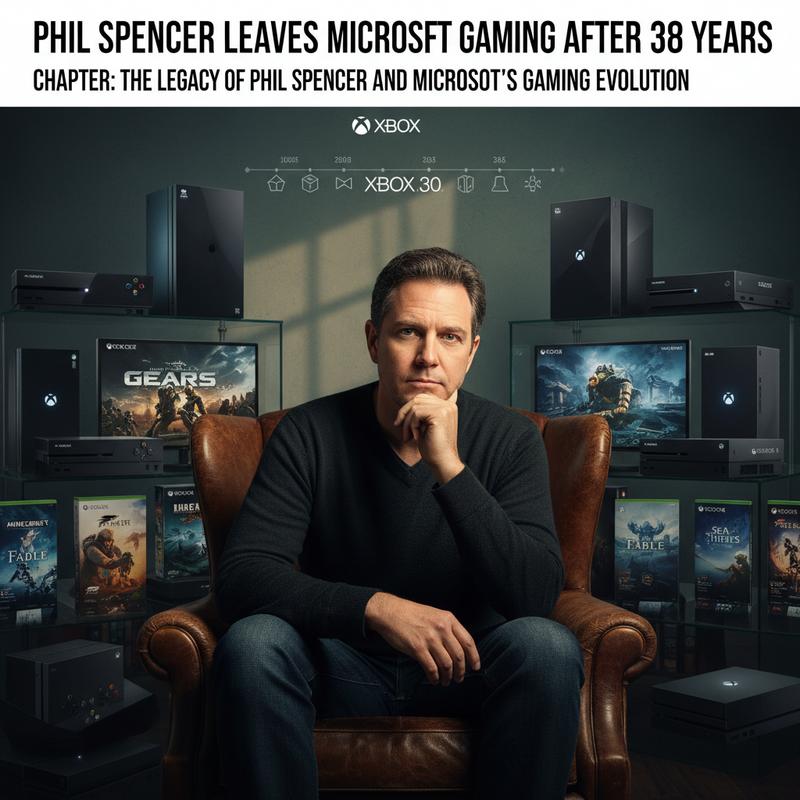
After nearly four decades at Microsoft, Phil Spencer, the Executive Vice President for Gaming, has decided to retire. Spencer has been a pivotal figure in Microsoft’s gaming division, especially during his 12 years steering the Xbox brand through both turbulent and triumphant times. As Spencer steps down, his legacy is marked not only by his early days as an intern in 1988 but more significantly by his influential tenure at Xbox.
When Spencer took over as Head of Xbox in 2014, he was tasked with navigating the brand through the troubled launch period of the Xbox One, when the Kinect’s involuntary bundling was met with widespread criticism. Demonstrating resilience and strategic foresight, Spencer played a significant role in re-establishing Xbox’s reputation. He later orchestrated major acquisitions like Bethesda Softworks in 2020 and the monumental $68.7 billion merger with Activision Blizzard. These moves were not only about expanding Microsoft’s gaming library but also establishing a more robust presence in the gaming industry.
As Spencer departs, he leaves behind a transformed Xbox that is less reliant on console exclusivity and leans more toward service-oriented gaming experiences. This transition is evident with Microsoft’s recent pivot towards gaming hardware innovation, exemplified by the introduction of the Xbox ROG Ally and other Windows-based portable gaming devices. These advancements suggest a strategic movement towards bridging console gaming with broader hardware ecosystem integrations.
Asha Sharma steps up as the new Executive Vice President for Gaming, promising to revitalize Xbox with a renewed focus on its core fan base and a commitment to the gaming community’s artistic spirit. Her vision includes diversifying the gaming experience across various platforms such as PC, mobile, and the cloud, setting a stage for innovative business models but with a clear stance against turning games into mere monetized assets.
In an increasingly AI-driven world, Sharma’s experience helming Microsoft’s CoreAI division adds an intriguing dimension to this transition. Despite her AI background, Sharma assures that Microsoft’s gaming future will not compromise on the artistic values that define video game creation. Her pledge to ‘preserve the soul’ of gaming aligns with Satya Nadella’s reassurance of the strategic importance of gaming within Microsoft’s consumer business goals.
The timing of these leadership changes introduces both challenges and opportunities. With Xbox hardware sales currently declining, the brand needs to redefine its identity just as it approaches its 25th anniversary milestone. As speculations on the form of the next Xbox console continue, Sharma plans to carry forward Spencer’s vision of an interconnected Xbox ecosystem where software bridges multiple devices, enhancing user experiences beyond traditional gaming consoles.
While Spencer will assist Sharma in an advisory capacity through the summer, his departure signals a profound shift in Microsoft’s gaming philosophy. This evolution could redefine what gamers and creators can expect from the Xbox brand in the years to come. As Microsoft finds itself at a crossroads, the foundation laid by Spencer ensures a steady path towards future growth, with Sharma poised to build on his remarkable legacy.
Final thoughts
Phil Spencer’s exit marks a significant transition for Microsoft Gaming, reflecting both the legacy he’s leaving behind and the fresh perspective Asha Sharma promises. As Microsoft’s gaming division enters a new chapter, the industry will keenly observe how these leadership changes shape the future of gaming. With innovation as a focal point and a commitment to traditional and emerging gaming platforms, this shift promises continued excitement and evolution for Xbox enthusiasts around the world.