Do you remember that entertaining quiz or service you signed up for using the ‘Sign in with Google’ option back in 2018? While it offered convenience, it also potentially granted prolonged access to your data. It’s like handing someone a spare house key and forgetting about it. This article explores the mechanisms behind such access using OAuth, shows you how to revoke it, and discusses the complex world of data retention policies. Each chapter unveils crucial steps and insights to help you securely manage your digital presence and reclaim control over who accesses your information, ensuring your privacy and peace of mind.
Inside OAuth: How Your Data Stays Connected

In the digital age, accessing online services has been simplified with methods like “Sign in with Google,” powered by the OAuth authorization framework. At its core, OAuth offers a mechanism to grant third-party applications controlled access to user data without sharing passwords. This convenience facilitates seamless engagements, but understanding its intricacies is crucial for managing data persistence in our interconnected world.
OAuth functions with four pivotal roles: the Resource Owner (user), the Client Application (the app requesting data access), the Authorization Server (validates and grants access tokens), and the Resource Server (manages the data being accessed). When a user opts to sign in via Google, the authorization server steps in, authenticating the user and generating a token. This token serves as a temporary key, allowing the client application to access user data as defined by the granted permissions.
The prevalent version of this protocol, OAuth 2.0, introduced the authorization code grant, enhancing user experience through its simple and secure flow. Initially, users are redirected to the authorization server. Upon consent, an authorization code is issued and exchanged for an access token by the client application. This token, limited and revocable, is employed to interact with the resource server, safely keeping user credentials away from the client.
One indispensable security feature of OAuth is its use of dynamic tokens that are limited in scope and duration, contrasting with basic authentication’s static passwords. Access tokens provide the privilege of minimal risk credentialing, as they can be voided independently of the user’s main account credentials. Additionally, OAuth supports refresh tokens that renew an expired access token without user disruption, further balancing security and user convenience.
Despite OAuth’s strengths in authorization, it is important to note that it does not serve as an authentication protocol. It merely ensures controlled access after initial user verification, often using framework pairings with authentication protocols like OpenID Connect. This distinction is fundamental, as OAuth governs rights and permissions rather than validating identity.
Data persistence, in the context of these OAuth services, ensures that user data remains intact even if the system encounters interruptions, like power losses or reboots. While OAuth helps manage real-time data access through tokens, the persistence of this data—its ability to be stored and retained despite service disruptions—depends on underlying systems such as Database Management Systems (DBMS), which maintain order and integrity, guaranteeing data is processed efficiently and remains accessible.
The intricate dance between security and convenience put forth by OAuth has led to its widespread adoption in platforms like Google and Twitter. Even though it is hailed for elevating security by not exposing passwords, it implicitly keeps connections alive with applications until the user actively revokes them. This ongoing access allows apps, like the 2018 quiz, to potentially gather data continuously until explicitly terminated by revocation at the Google Connections page.
Understanding how OAuth operates illuminates why your data might still be accessible years after you last thought about that random quiz or application you signed up with. By recognizing OAuth’s role in your online interactions, you not only gain insight into data connectivity but also hold the key to managing these digital footprints actively, keeping your information secure and your permissions in check.
Taking Back Control: Your Personal Data Kill Switch

In our increasingly digital world, where data flows with seemingly nonchalant ease, maintaining control over personal information is more crucial than ever. The option to revoke access, sometimes metaphorically referred to as a ‘kill switch,’ offers an empowering means to regain command over data shared with third parties. Much like a hardware kill switch physically halts the operation of a device component, Google’s connection management page acts as a digital equivalent, allowing users to sever ties with apps and services that once had permission to access their Google data.
When we initially authorize third-party apps by clicking ‘Sign in with Google,’ we unwittingly hand over a set of keys with indefinite use. This OAuth-based access persists until manually revoked through the connection settings. This experience is akin to leaving the front door wide open — while the connectivity provided can be convenient, it also presents inherent risks if control is not periodically reassessed. The page at myaccount.google.com/connections offers you the ability to view and manage these external connections, granting you the decisive power to ‘remove access’ at any given moment.
However, this action is only part of an ongoing vigilance strategy. Once you disconnect these services, they can no longer access new data. Nonetheless, any information previously shared with them may still reside within their systems. Each service has its own data retention policies, and unless these policies align with your privacy expectations or legal obligations like GDPR, further action might be necessary. This could mean actively reaching out to third-party services to ensure deletion of retained personal data. An awareness of GDPR regulations and compliance standards can guide users to enforce the deletion of data that is no longer necessary for its original purpose.
The concept of a kill switch is not limited to software or account settings. In the realm of secure technology, hardware kill switches physically disconnect a device’s key components, like cameras or microphones, from power sources when toggled off. This provides absolute assurance, surpassing software solutions which might be compromised by malware or system bugs. Although software toggles offer basic control, hardware switches ensure total isolation from potential breaches, providing a tangible checkpoint of privacy where no data can flow unless explicitly allowed.
For those who routinely deal with sensitive information, employing devices with hardware kill switches in addition to using robust digital controls like Google’s access management can create a fortified barrier against unauthorized data sharing. This dual-layered approach is akin to maintaining digital lock and chain—software provides the first line of defense, and hardware ensures a fail-safe for vulnerabilities that might slip past the software barrier.
Understanding the broader landscape of kill switches, one might explore how VPNs use similar concepts to maintain privacy. Should a VPN connection drop, its kill switch acts to halt all internet traffic, preventing inadvertent exposure of your IP address. In a more speculative vein, upcoming browser features and safety protocols, like Firefox’s AI kill switches, reflect ongoing innovation, aiming to give users more control over what data modern applications and features can access or manipulate.
In conclusion, utilizing the ‘kill switch’—whether in software via myaccount.google.com/connections or with physical hardware—is about more than just preventing unauthorized access. It’s a commitment to vigilance, an ongoing process of auditing and managing one’s digital footprint. For those interested in a deeper dive into managing digital privacy, resources like IT Carolina can provide further insights and tools to enhance your data security practices.
Understanding the Nuances of Data Retention Policies
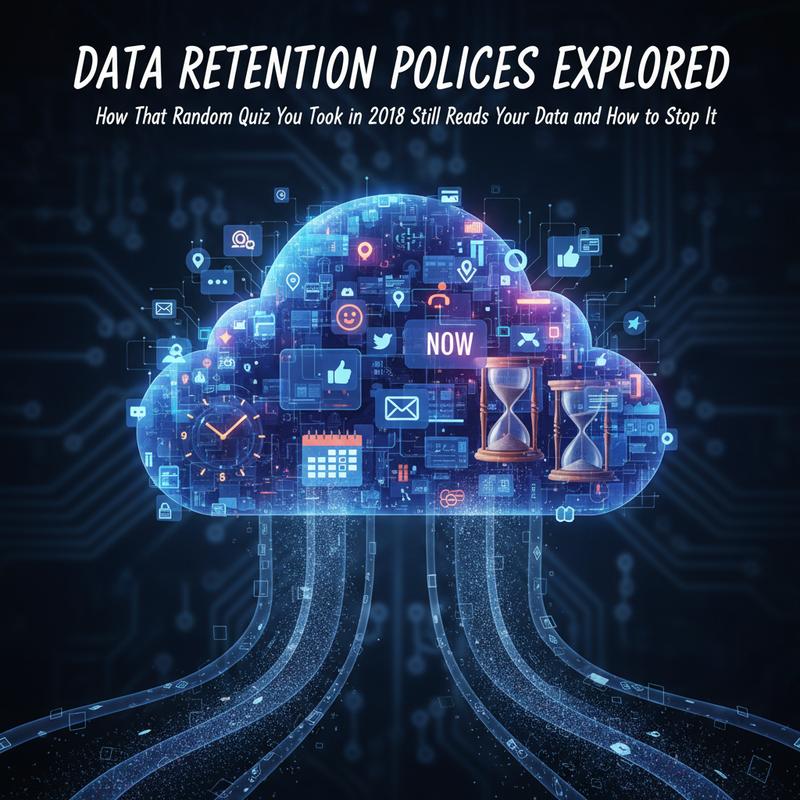
Data retention policies underpin the backbone of modern digital data management, balancing legal obligations, operational necessities, and the mitigation of risks associated with data storage. At their core, these policies serve as documented guidelines that specify the duration organizations must or may retain different types of data before initiating deletion or irreversible anonymization processes—a crucial aspect not just for maintaining compliance but also for optimizing data handling practices.
The General Data Protection Regulation (GDPR) has significantly informed contemporary data retention frameworks, particularly with its Storage Limitation Principle as outlined in Article 5(1)(e). This principle mandates that personal data should be stored no longer than necessary for its specified processing purpose. Take, for instance, raw Personally Identifiable Information (PII) or pseudonymous data used extensively in AI algorithm training: once the purpose is fulfilled, the data must either be deleted or anonymized securely. An interesting contrast to GDPR is the EU AI Act, which requires a 10-year retention period for non-personal records such as technical documentation, quality management systems, and anonymized logs pertaining to high-risk AI systems. Although it enforces extended retention, it does not override the GDPR’s rules concerning personal data deletion.
A comprehensive data retention policy encompasses several key components. First and foremost is the identification and categorization of data—an essential process that seeks to inventory all document types, establishing their retention periods based on legal, operational, and historical value. For instance, personal data might be treated differently depending on its usage context compared to audit logs or other business assets. Subsequently, crafting defined retention periods becomes paramount; these timelines must be backed by legislative requirements or business needs. Companies like Twilio Segment exemplify this by setting varied retention periods across different data categories: three years for business archive/profile event data, contrasting sharply with the 180-day retention for objects under their free or team plans.
Equally important are the deletion and anonymization procedures, which ensure data is disposed of securely and irreversibly, typically through automated scheduling aligned with the tenure of the data. Following this is the need for accountability and enforcement, which sees data controllers actively defining schedules and overseeing workflows, supported by automated checks to confirm compliance. Additionally, maintaining thorough documentation and audits allows an organization to provide proof of compliance and foster confidence in its data governance practices.
Understanding the implications of non-compliance with data retention statutes is also critical. Under GDPR, failures can lead to hefty fines reaching up to 4% of an organization’s global turnover. In more practical terms, lapses can trigger operational disruptions or legal exposures, impacting the organization’s reputation and operational continuity.
Implementation of data retention policies often requires consultation with legal experts to align with regulatory demands, as well as the integration of these policies within broader data governance frameworks. Training, tools, and regular reviews further ensure their effectiveness. While implementing these policies can yield significant benefits like reduced storage costs and breach risks, the pathway to seamless integration can be complex.
Organizations navigating these policy landscapes must remain vigilant of the evolving regulations and their implications. Balancing the immediate utility of data with long-term security and compliance needs is no easy feat, yet it remains an indispensable endeavor in our data-driven world. For further insights into optimizing business processes and infrastructure, check out IT Carolina’s business services.
Final thoughts
Taking the necessary steps to review and revoke access to connected third-party apps can significantly enhance your privacy. By understanding OAuth’s role in persistent data access and the nuances of retention policies, you arm yourself with the knowledge to better manage your digital footprint. Regularly reviewing your active connections, and demanding data deletion where necessary, empowers you to uphold privacy and minimize potential data breaches. Stay proactive and safeguard your personal information to enjoy a more secure online experience.
Take back control of your digital privacy—secure your connected accounts today with help from IT Carolina.
Learn more: https://itcarolina.com/about/
About us
At IT Carolina, we do more than just optimize gaming and entertainment tech—we protect your digital footprint. Our experts help general users navigate online account security, remove outdated third-party access, and configure privacy settings for safer browsing. Don’t let forgotten connections compromise your data. With IT Carolina, reclaim control and enjoy a secure, frustration-free digital experience.